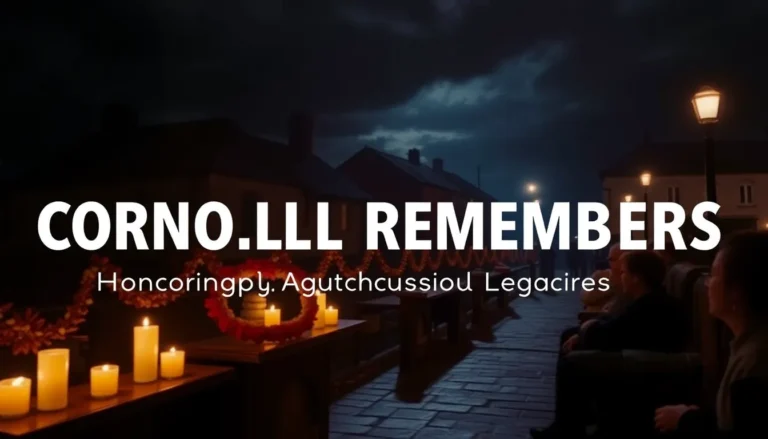
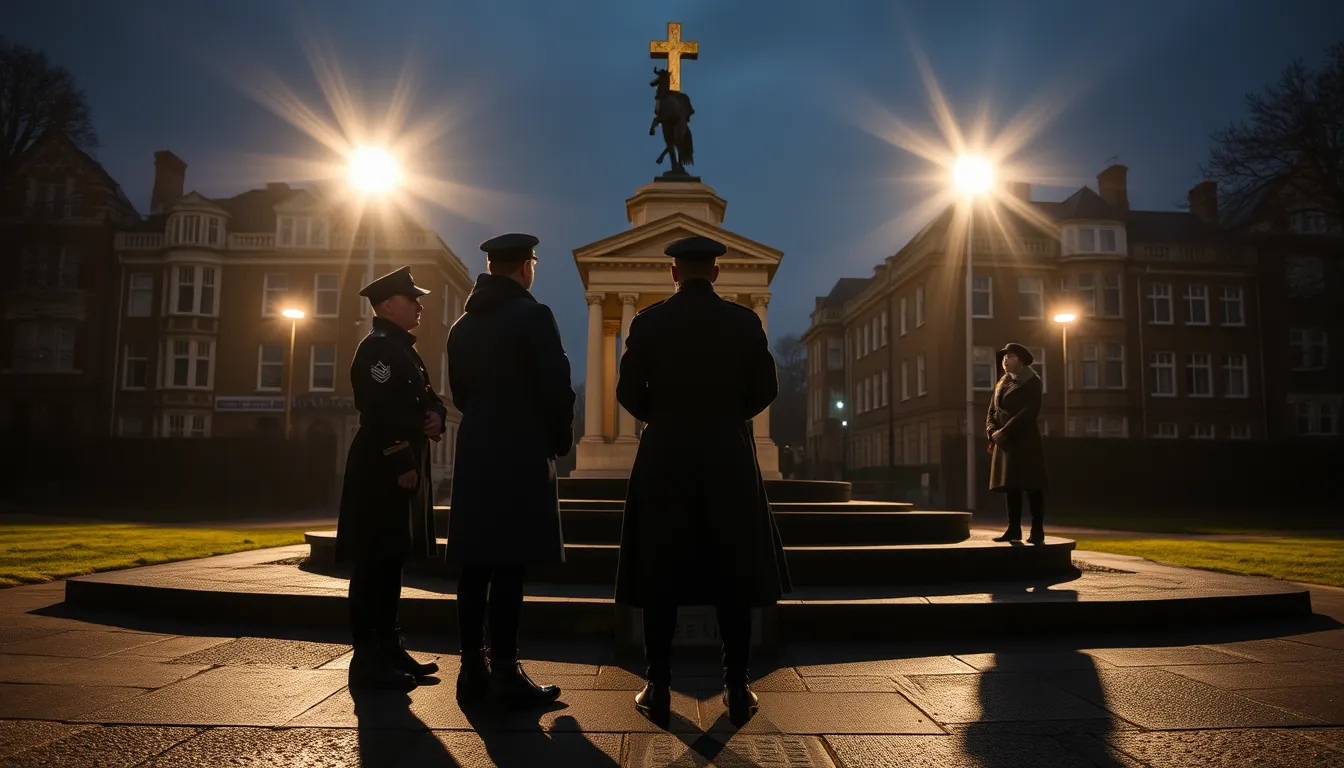
Penair pupils’ AI war film honours Cornish tunnellers at the Cenotaph
Why the St Agnes and Truro story matters to Cornwall
For anyone who grew up around Truro, the names in this story will feel familiar. Penair School sits on the edge of the city, and its pupils have spent the past year tracing men whose lives were shaped by the mining villages that still dot our county’s landscape. Their research took them to St Agnes Museum, where the stories of local miners are kept alive through photographs, letters and objects donated by families who never forgot. St Agnes itself is one of those places where you can still see the engine houses on the skyline and understand how deeply underground work defined whole communities.

The pupils focused on Cornish miners recruited for tunnelling under No Man’s Land during the First World War. These were men who knew how to read rock, handle explosives and work in cramped, dangerous conditions, and the army needed exactly those skills. Their tunnels ran beneath enemy lines on the Western Front, a reminder that Cornwall’s industrial heritage travelled far beyond its own coastline.
The project also reached into a painful local chapter. The 1919 Levant mine disaster near St Agnes claimed 31 lives after an underground winding system collapsed, and several of the men the pupils studied had survived the war only to die in that tragedy. For many residents, Levant is not distant history. It is a name that appears on memorials and in family stories across west Cornwall, and this research gives it a fresh and personal voice.
The pupils, teachers and organisations behind the project
At the centre of this story are the pupils themselves. Erin, 14, and Morley, 13, were among the team that spent around 400 hours working through wartime diaries and census records. Erin spoke about how the group grew attached to the men they were researching, and how upsetting it was to find the records of their deaths. Morley described the experience as the highlight of his school years, which says a great deal about what happens when young people are given real historical sources rather than textbook summaries.
Their history teacher, Tina Turuelo, has been a steady presence throughout. She described how the men became real to the students and remain real today. Her support helped the project win the Malcolm Doolin Award for local historical research, a recognition that matters for a small Cornish school competing against wider entries.
The project was also recognised by the Western Front Association, the group behind the national Armistice commemorations. Its invitation to lay wreaths at the Unknown Warrior memorial at Victoria Station and at the Cenotaph in Whitehall means these Truro pupils will stand alongside national figures and veterans’ families. For the students, it is a chance to represent every Cornish miner who went underground for the war effort and never came back to tell his own story.
What Cornish readers should know and where to go next
If you have a relative who served in the Royal Engineers tunnelling companies, or whose family worked in the mines around St Agnes, now is a good time to share what you know. Local museums and archives are often looking for family photographs, letters and records to add to their collections, and projects like Beneath the Battlefields show how much can still be uncovered. Contacting St Agnes Museum or your local library is a practical first step, and many volunteers are happy to help with census and service record searches.
Residents can also follow the Armistice Day events, either in person at local war memorials on 11 November or through the BBC Cornwall coverage that will carry the London ceremony. Many towns across the county hold their own services, and turning up to one is a quiet way to honour the men named on local memorials.
For those planning a day out, the mining heritage trail around St Agnes makes a good starting point, and afterwards the coast is never far away. Many visitors finish the day with a walk or a surf at Fistral Beach in Newquay, which is an easy drive from the mining villages and a reminder of how close the sea and the old workings have always been. If you are considering a longer trip, do check whether your accommodation welcomes dogs, as many beaches along the north coast have seasonal rules. With the 110th anniversary of the Battle of the Somme this year, expect more local commemorations and stories to appear in the months ahead.
Source: Cornish pupils behind AI war film to lay wreath at Cenotaph