
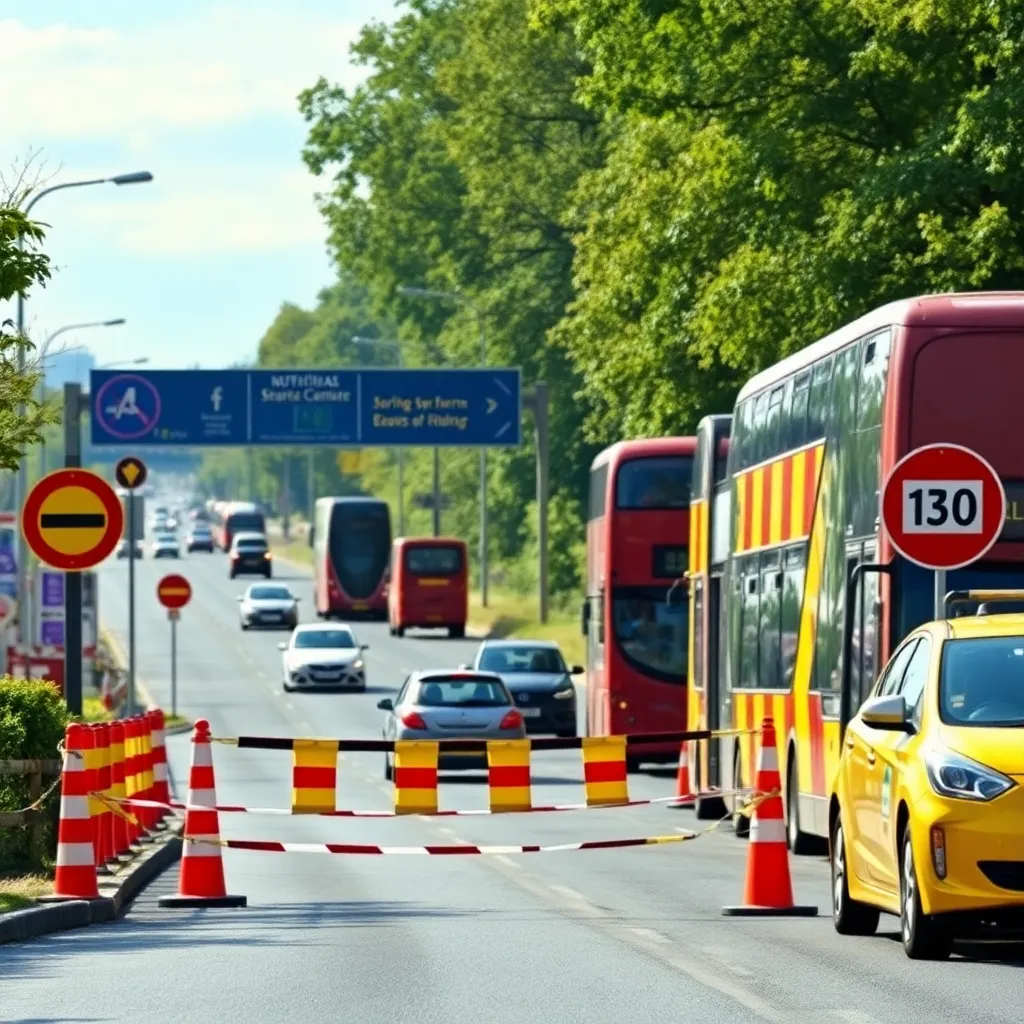
A30 Reopens: Disruption Ends as Cordon Lifted
The significant disruption caused by a cordon, which had necessitated the closure of a section of the A30, has now come to an end as authorities have confirmed its lifting. This development marks a crucial return to normalcy for one of the region’s vital transport arteries. The imposition of such a cordon would have undoubtedly created considerable challenges for daily commuters, local businesses, and residents who rely heavily on the A30 for their travel and logistical needs. During its active period, the closure would have diverted traffic onto alternative routes, potentially leading to increased congestion in surrounding areas and extending travel times for many.

The specific reasons for the initial establishment of the cordon, while not detailed in this immediate update, would have been deemed sufficiently serious to warrant such a measure, underscoring a paramount concern for public safety. The decision to lift the cordon indicates that the underlying issue or incident that prompted its implementation has been effectively resolved or mitigated to a point where the area is once again safe for public access. This resolution is a welcome relief for the community, signifying that any immediate threat has passed and that regular activities can resume without impediment.
The A30 serves as a critical link, connecting various towns and communities, and its temporary closure would have had a ripple effect on local commerce, emergency service response times, and general public convenience. The swift action to resolve the situation and subsequently lift the cordon highlights the responsiveness of local agencies in managing incidents that impact major infrastructure. For the community, the removal of the cordon means an end to the uncertainty and inconvenience, allowing for smoother journeys and the restoration of normal routines. The incident, though brief, serves as a reminder of the importance of robust emergency protocols and the collaborative efforts required to maintain public safety and efficient transport networks.
(Source: https://www.bbc.com/news/articles/crk7pr588vmo?at_medium=RSS&at_campaign=rss)