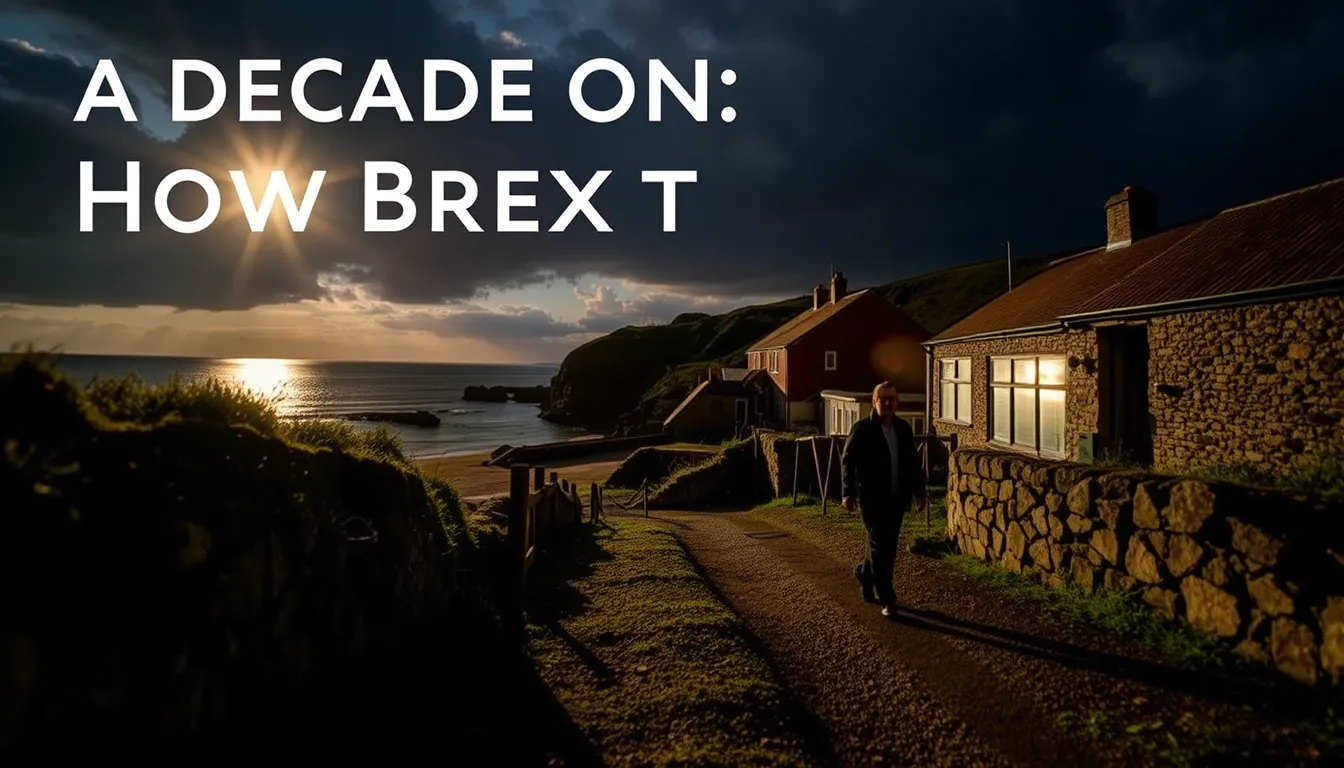
A Decade On: How Brexit Has Reshaped Life in Devon and Cornwall
The Promise and the Reality: What Our Fishing Communities Expected
When Britain voted to leave the European Union in 2016, the fishing industry became the symbolic heart of the campaign. Local voices from ports like Newlyn promised a renaissance—reclaimed waters, fairer quotas, and a thriving future for smaller British trawlers. A decade later, the reality has disappointed many who voted for change.

Phil Mitchell, a respected figure in Newlyn’s fishing community, represents the disillusionment felt across Cornwall’s coastal towns. He invested in his own vessel based on the promises made during the referendum campaign. Today, he’s had to step back from boat ownership and now works as a skipper for another company—a significant personal loss for someone who believed in the new direction.
The core grievance remains unchanged: EU vessels still fish within Britain’s 12-mile territorial waters, directly competing with local boats. When the government extended access agreements for another dozen years, it felt like a betrayal to those who’d backed Brexit specifically to “take back control.” Add to this the new export controls that make selling caught fish across the Channel far more complicated and costly, and you understand why Mitchell concludes they’re “probably worse off now than when we started.”
Farming Families Navigate Uncertain Territory Between Two Systems
On Cornwall’s farmland, the story is more nuanced. The European Union’s Common Agricultural Policy once provided substantial subsidies to landowners—support that small family farms across the South West had grown dependent upon. When Brexit loomed, many farmers worried Westminster wouldn’t prioritize agricultural support the way Brussels had done.
Martin Howlett, who farms near Callington, admits he was a reluctant Remainer, concerned about losing those safety nets. Yet even he acknowledges that the post-Brexit decade hasn’t been entirely bleak. Beef and sheep prices have roughly doubled, providing welcome income boosts during challenging economic times. His livestock business has benefited from market dynamics that favour British producers.
However, the gains haven’t offset rising operational costs. Farmers have had to become increasingly creative, making Brexit work through careful management and adaptation. The transition from EU farm subsidies to new government support schemes has been what Howlett describes as “a bit of a mess,” with uncertainty about long-term funding still hanging over the sector. For agricultural families who’ve farmed these Devon and Cornwall valleys for generations, the question remains: can this new system truly support their future?
What Locals Need to Know as We Look Ahead
For those living and working across Devon and Cornwall, the post-Brexit decade reveals a region still in transition. Our fishing ports and farming communities face genuine challenges that won’t resolve quickly. The extension of EU fishing access until 2038 means another generation may grow up watching foreign vessels work British waters.
Local residents should stay informed about policy changes affecting food producers and coastal industries—these decisions shape our region’s character and economy. If you’re planning to explore what makes the South West special, whether that’s a visit to Newquay to enjoy Fistral Beach or discovering dog-friendly accommodation in charming coastal villages, remember that you’re supporting communities navigating real economic uncertainty.
The broader lesson is that Brexit’s impact isn’t merely political—it’s deeply personal for families and business owners who staked their futures on different outcomes. As we watch how government policies evolve, local residents must hold leaders accountable for delivering the benefits promised, particularly in fishing and farming. Stay engaged with local news, support struggling industries where possible, and recognize that our region’s prosperity depends on thoughtful solutions to these ongoing challenges.
Source: Is the South West better or worse off 10 years after Brexit?