
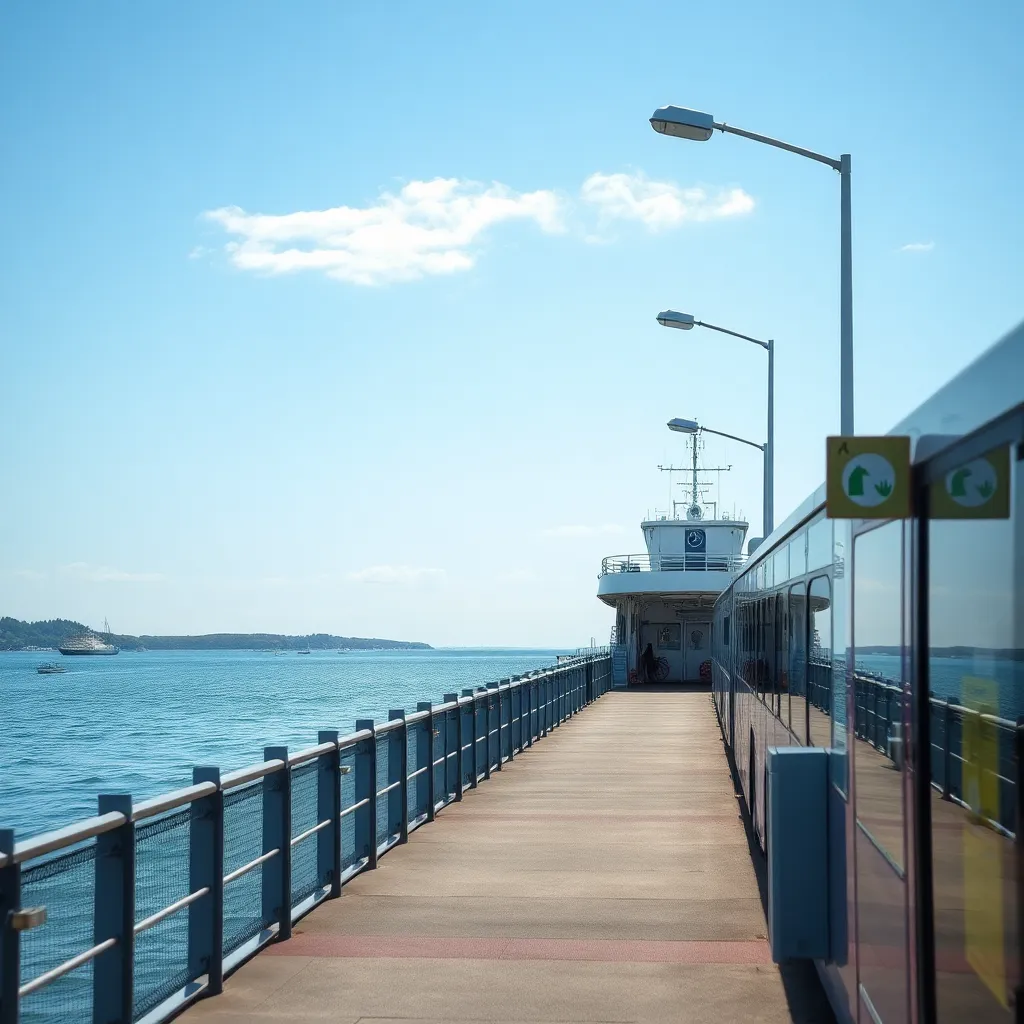
Ferry Electrification: Torpoint’s Green Leap to Decarbonisation
The Torpoint Ferry, a crucial transport link between Cornwall and Plymouth, is set for a significant green transformation with a trial of electric power commencing in 2025. This initiative marks a major step in decarbonisation efforts, aiming to replace the ferry’s current fossil fuel consumption with sustainable energy. Operated jointly by Plymouth City Council and Cornwall Council via the Tamar Bridge and Torpoint Ferry Joint Committee, the three chain ferries serve as a vital lifeline, connecting Torpoint in Cornwall with Devonport in Plymouth. Annually, this service facilitates approximately 2.5 million vehicles and 800,000 pedestrians, highlighting its immense local impact on commuters, businesses, and tourism across the two counties.

The ambitious project has secured substantial funding, receiving £3.9 million from the UK government’s Clean Maritime Demonstration Competition (CMDC) Round 4, managed by Innovate UK. Naval architects BMT are leading this pioneering study, collaborating with a consortium of key partners including The University of Exeter, Babcock International, Marine Zero, Lloyd’s Register, and Artemis Technologies. The trial will explore the feasibility of integrating shore-side charging infrastructure and advanced on-board energy storage systems, primarily batteries, to power the ferries.
Community leaders have voiced strong support. Cllr Jonathan Drean, Chairman of the Joint Committee and a Plymouth City Council member, highlighted the ferry’s role as an “essential lifeline” and reiterated the commitment to greener transport for the region. Similarly, Cllr Martin Worth, Vice-Chairman from Cornwall Council, emphasized the environmental advantages this transition will bring, including cleaner air, reduced noise pollution, and long-term operational cost savings. Dr Jonathan Williams of BMT noted the project’s potential to establish a scalable blueprint for other ferry operators. This trial positions the Torpoint Ferry at the forefront of the UK’s national strategy to achieve a fully decarbonised maritime sector by 2050, marking a significant stride towards a more sustainable future for the local community and beyond.
(Source: https://www.bbc.com/news/articles/cx2pn7rx4d1o?at_medium=RSS&at_campaign=rss)