Mid-Cornwall Residents Protest Against Trelion Solar Farm Plan
Protest at County Hall Over Solar Farm Plans
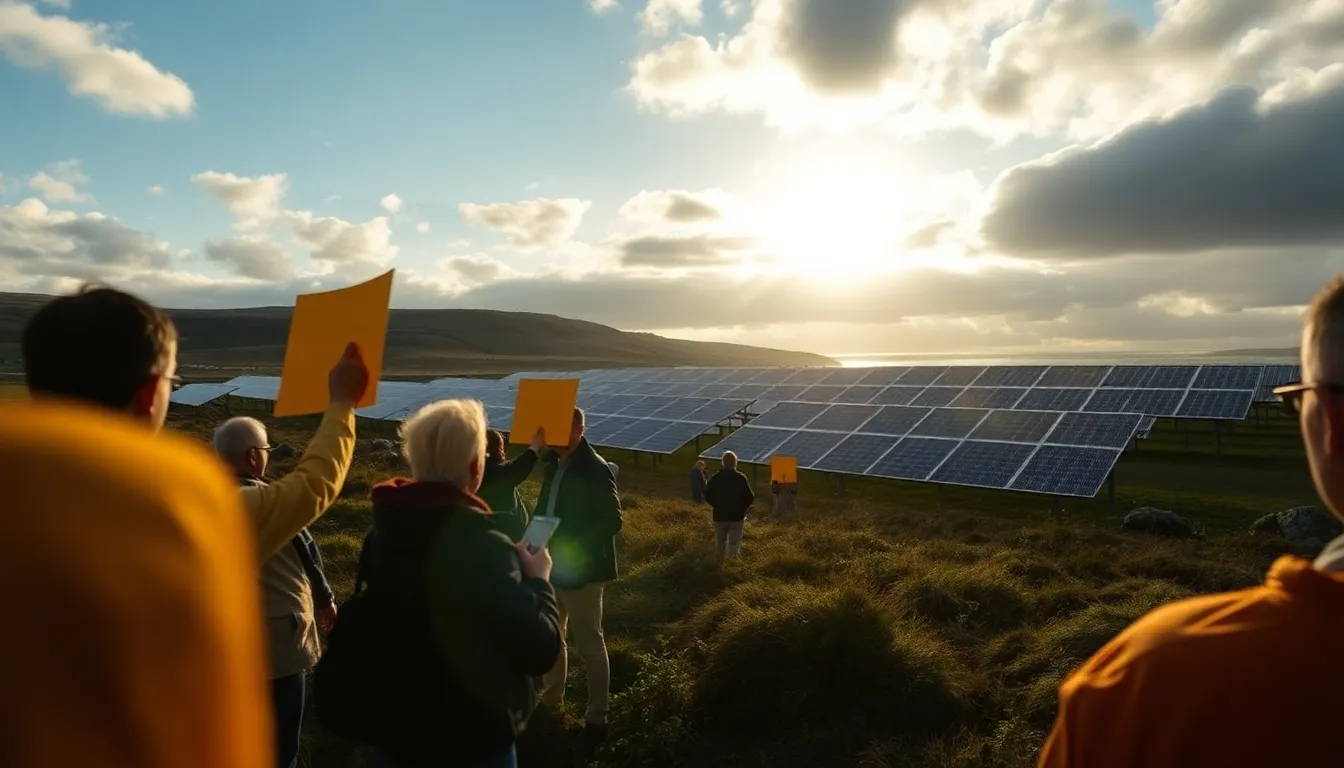
Residents gathered outside Lys Kernow, Cornwall Council’s headquarters in Truro, this week to voice their opposition to a proposed 49.9MW solar farm at Trelion, near St Stephen. The site, spanning almost 204 acres across 19 fields, is being proposed by French energy giant EDF Renewables. For many locals, the protest represents more than just one planning decision — it’s about the cumulative impact of solar development across mid-Cornwall. Campaign group Stop Trelion Solar says the region already hosts nine solar farms within a five-kilometre radius, a concentration they claim is 20 times higher than the Cornwall average. Rose Barnecut, a spokesperson for the group, described the area as being caught in a ‘solar gold rush,’ with local communities bearing the brunt of infrastructure changes while profits flow overseas. The protest drew significant attention from parish councillors and long-standing residents alike, many of whom fear the visual and environmental transformation of a landscape that has long been defined by its agricultural heritage and clay country charm.

Local Voices and Community Concerns
Among those protesting was Shirley Anderson, who grew up on Penhale Farm — the site now facing transformation into a solar park. Having lived there since 1941, with family members still farming the land today, Anderson’s connection to Trelion runs deep. Her testimony reflects a broader anxiety felt by many in St Stephen-in-Brannel, where the parish council and over 100 residents have formally opposed the application. Concerns extend beyond aesthetics: 27 households relying on private water supplies fear potential contamination risks during construction and operation. Food security is another pressing issue, as campaigners highlight that fertile agricultural land is being sacrificed for renewable energy infrastructure. While solar power plays a vital role in the UK’s clean energy transition, residents argue that planning policies designed to prevent cumulative environmental impact are being overlooked. The tension between national energy goals and local community welfare has become a flashpoint, with residents urging councillors to consider long-term consequences for both people and the environment in this part of Cornwall.
What Happens Next for Mid-Cornwall
As Cornwall Council’s strategic planning committee deliberates, all eyes remain on how officials balance renewable energy targets with community and environmental concerns. Residents are encouraged to stay informed by checking the Public Notice Portal for updates on planning applications, road changes, and licensing matters affecting their neighbourhoods. Beyond the solar farm debate, mid-Cornwall continues to be a region worth exploring — from its rugged coastline to nearby attractions. Visitors looking to escape the planning controversy might consider a trip to Newquay, just a short drive away, where dog-friendly accommodation and welcoming beaches make it an ideal getaway. While dogs on beaches are restricted seasonally at spots like Fistral Beach, alternative pet-friendly areas remain open year-round. For those who choose to go to Newquay, the contrast between rural land-use debates and coastal leisure highlights Cornwall’s diverse character. Meanwhile, campaigners like Stop Trelion Solar vow to continue their fight, urging residents to attend future council meetings and stay engaged with local democracy as the future of Trelion’s landscape hangs in the balance.
Source: Protesters say mid-Cornwall is swamped and can’t take any more solar